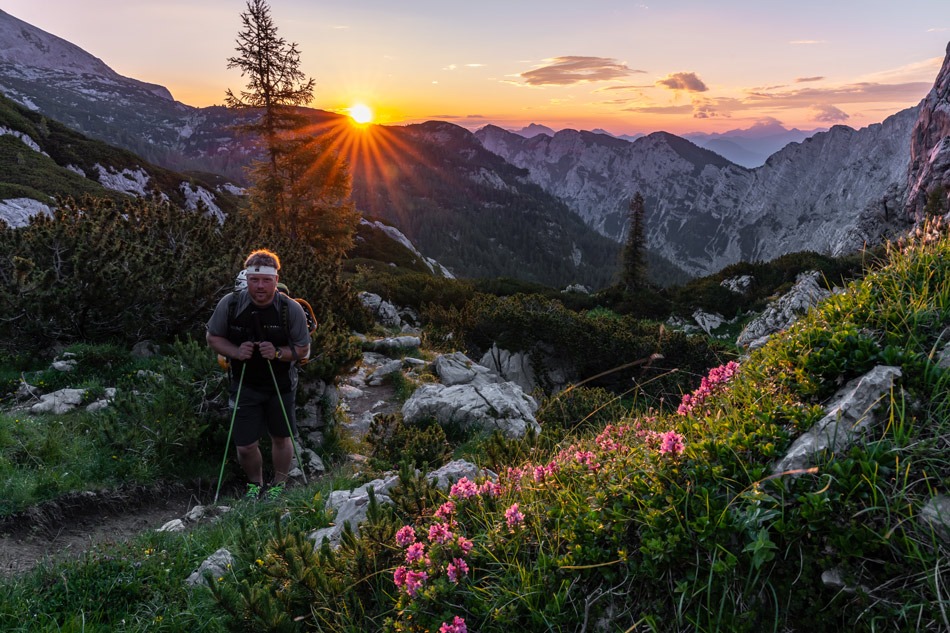
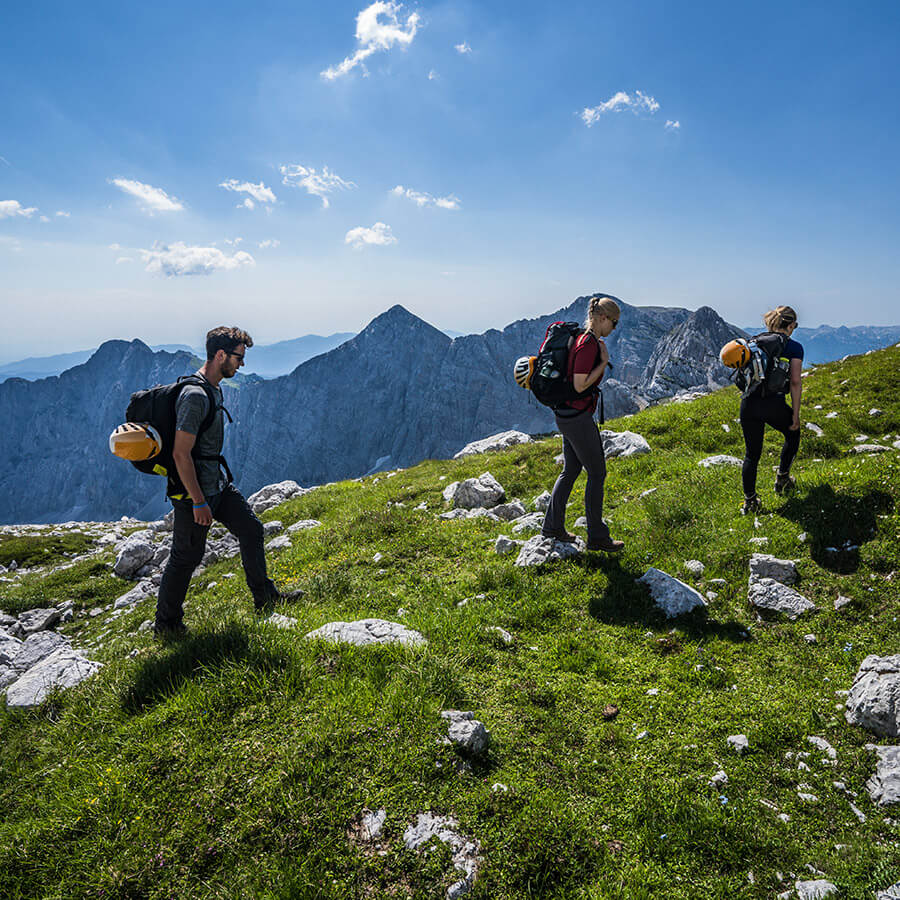
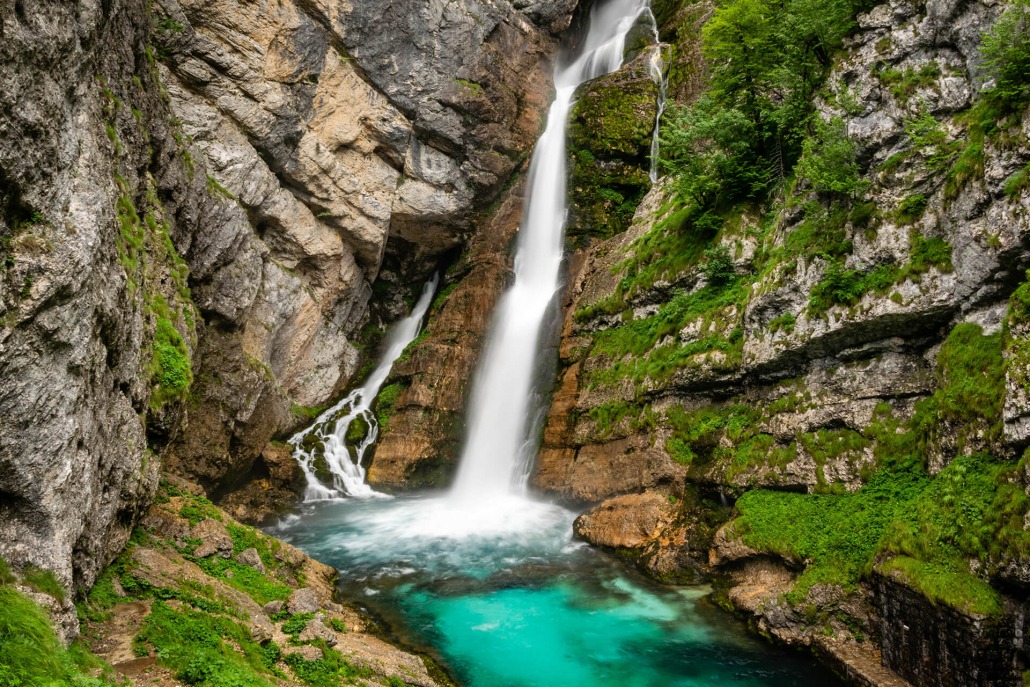
Welcome to our Triglav National Park Slovenia Guide, written from the perspective of locals who know these mountains, rivers, and valleys by heart. We’ve spent our whole lives exploring Triglav National Park, and even after all these years, it still feels like a place full of new discoveries. As Slovenia’s only national park and home to Mount Triglav, our highest and most iconic peak, this landscape is deeply connected to who we are and how we grew up.

With more than 800 square kilometers of mountains, lakes, valleys, wildlife, and traditional villages, the park offers a kind of beauty that’s impossible to rush through. There’s also a lot of information online, and much of it is written by tourists themselves. Their experiences are valuable, of course, but as locals we often notice missing details, outdated tips, or spots that get overlooked simply because they’re not on the typical visitor’s route.

In this guide, we want to share Triglav National Park the way we know it—through local tips, hidden spots we love, and the essential things we think every visitor should understand before stepping into Slovenia’s most beloved landscape. At the end of this guide, we’ve explained one of our favourite road trip routes: the 7 Alpine Wonders Tour.

Now, let’s dive into the park’s most iconic gem—Mount Triglav—and see whether hiking to the summit is the right decision for you.

Mount Triglav Hike: Is It a Good Idea?

We get a lot of questions about how hard the climb to Mount Triglav really is, and whether it’s suitable for everyone — the short answer is: no, it isn’t. Although Triglav is often described as “quite easy” for a country’s highest peak and has gained huge popularity in the last ten years, as locals we feel a responsibility to warn you: the ascent is not for everyone, even in the summer.

According to the Slovenian Mountain Rescue Association (GRZS), there were 633 rescue interventions in 2024 alone carried out in Slovenian mountains. Many of these rescues stem from poor equipment choices — for example, in spring or early summer when people mistake “normal summer hiking shoes” for proper mountain boots, or don’t realise there can still be snow and icy patches at high altitude even though the valley is hot and sunny.

If you decide to hike Triglav, you should already have some mountain-hiking experience. It’s always better to hire a guide if you’re not confident in navigating alpine terrain and understanding the safety demands.

If you go by yourself, be sure to bring — beyond standard hiking gear — a proper via ferrata set (you can rent full mountaineering equipment from our office), because the route to the summit includes a via ferrata section. For most average hikers a two-day hike is the wise choice, though very fit and well-prepared people may do it in one day.

Now that you know what’s involved in climbing Mount Triglav, it’s time to explore the best alternative. Let us introduce you to the Debela Peč hike.

Hiking Tours Slovenia
Hiking Slovenia Tours

Looking for an Easier Summit in Triglav National Park Slovenia? Debela Peč Might Be the Perfect Choice

And one more local tip: Triglav may be the highest mountain in Slovenia, but in midsummer it’s also very busy. So if you’re in doubt about your capabilities, we recommend considering Debela Peč instead. It is a peak we locals often suggest to visitors who want a rewarding mountain experience without pushing their limits. At just over 2,000 meters, Debela Peč offers one of the best panoramic views of Mount Triglav and the surrounding Julian Alps, and the hike itself is much more accessible for the average hiker.

The trail is well-marked, never too steep, and doesn’t require any technical equipment, which means you can fully enjoy the scenery without worrying about via ferrata sections or exposure. What we love about Debela Peč is how peaceful it feels compared to Triglav, especially in summer when the highest peak gets crowded. The views are impressive, the climb is manageable, and you won’t end the day completely worn out or needing several days to recover.

Both 1-day and 2-day tours to Triglav and Debela Peč (Panoramic Hiking) are available on our website, and for many visitors, it ends up being the absolute highlight of their trip — a perfect blend of Alpine beauty, achievable challenge, and genuine enjoyment.

If longer hikes are more your style, the iconic Seven Lakes hike could be exactly what you’re looking for.

Two hikers sitting on a rocky ledge with panoramic views of the Julian Alps near Debela Peč

The Seven Triglav Lakes Valley: The Heart of the Triglav National Park

The valley of the Triglav’s lakes is a high mountain Alpine valley located between Lake Bohinj and the Trenta Valley. The Valley of Seven Lakes is eight kilometres long and is considered one of the most beautiful parts of the Julian Alps. The lakes are something special, as they glisten in green, turquoise, and emerald colours.

The area was officially protected in 1924 as the Alpine Conservation Park, but later in 1961 Triglav’s seven lakes were protected under the state institution of the Triglav National Park Slovenia. Therefore, all seven lakes are located in the heart of the park.

In fact, there are ten lakes in this valley, but the name of seven lakes was nevertheless kept for several reasons. First, because of the magic of the highlands in the Julian Alps, especially in the wintertime, and as a result, number seven was taken as a fairy-tale number. Secondly, three out of ten lakes are left without water during the warmer months of the year, while the remaining seven lakes are filled with water throughout the year.

Before you plan your route, we’d love to give you some local advice on avoiding the crowds on the Seven Triglav Lakes Hike.

Valley of seven Triglav Lakes
Seven Triglav Lakes Hike

How to Avoid the Crowds? Explore the Less Crowded 7 Lakes Route

Because the Seven Triglav Lakes are so incredibly beautiful, many people have the same idea as you — to see them up close. Over the summer months, the main 7 Triglav Lakes Valley trail becomes extremely crowded, especially on weekends and during school holidays. That’s why we locals often recommend choosing a slightly longer and more challenging two-day route that runs along the ridge instead of inside the valley. Not only will you avoid the crowds, but you’ll also enjoy breathtaking, bird’s-eye views of the lakes from above.

You’ll start your hike at Planina Blato, near Bohinj, and walk toward Planina pri Jezeru. From there, you’ll begin your ascent toward Mala Tičarica, reaching around 1,800–1,900 metres of altitude. Once on the ridge, your trail continues over Mala Tičarica and then to Velika Tičarica, where you’ll get the best views of the Trenta Valley and the surrounding Kriški Podi mountains.

Day one usually takes around 9 hours of hiking, ending with an overnight stay at Zasavska Koča. On the second day, you can descend through the valley and complete a loop back to the starting point.

Local tip: Mountain huts in the Seven Triglav Lakes Valley fill up very quickly in summer, so it’s best to book your stay months in advance. Also, don’t expect luxury — the huts are simple and very basic, with shared rooms where multiple hikers sleep in the same space. It’s all part of the authentic mountain experience, but good to know in advance!

If you’d like to take this route, let us know. We can send you a detailed guide and GPX file for your smartwatch or phone, or provide free 14-day access to the Outdoor Active App to help you navigate.

If you’re planning the Seven Triglav Lakes hike or any of the other amazing routes in Triglav National Park, Bohinj is the ideal base. Keep reading to learn why we recommend it.

For Hiking Lovers, Bohinj Is the Ideal Place to Stay

If you’re a hiking enthusiast, we can say from experience that Bohinj is the perfect place to stay. As locals, we always point hikers toward Bohinj because it gives you direct access to some of the best trails in Triglav National Park — without the crowds you’ll often find around Bled. From Bohinj, you can reach the Pokljuka Plateau, the starting point for countless routes, including some of the most popular approaches to Triglav.

Lake Bohinj
Savica Waterfall in Bohinj

The atmosphere here is calmer, more authentic, and closer to nature, making it an ideal base if you want to wake up early, hit the trails, and feel the mountains right at your doorstep.

Lake Bohinj is the largest permanent lake in Slovenia, with many natural wonders around it, located in the Triglav National Park. Bohinj also offers many outdoor activities, including rowing, fishing, rock climbing, and mountain biking. In the summer, the lake becomes a popular swimming spot when the water temperature rises to 24 degrees Celsius.

Boat rides that connect the alpine villages by the lake, Ribčev Laz tourist resort, and Ukanc village with Zlatorog camp, are also popular among visitors. From Ukanc village, you can also take a cable car to Mt. Vogel.

Savica Waterfall is one of the most picturesque waterfalls in Slovenia, as the 78-meter-high waterfall drops into an emerald-green river pool, from which the stream flows into Lake Bohinj. You can reach Savica Waterfall on a pathway leading from Ukanc village near the Lakeshore to Savica cottage and then uphill on the stone steps.

Just across the hills lies a valley carved by one of Europe’s most iconic rivers, our beloved Soča. In the next paragraph, we’ll share how to truly make the most of your visit.

Soča River: The Most Beautiful Alpine River in Europe

Often called one of Europe’s most beautiful rivers, the Soča River holds a special place in Slovenian hearts thanks to its emerald color, pristine nature, and rich history. The Soča Valley was the site of the Isonzo Front between 1915 and 1917, where over 300,000 soldiers lost their lives — a striking contrast to the peaceful landscape we see today.

The river begins in the Trenta Valley inside Triglav National Park and flows 136 km toward the Adriatic Sea, carving gorges, waterfalls, and bright turquoise pools along the way. Its narrow, ten-meter-deep gorges were shaped by retreating glaciers, and the vivid emerald color appears where the water runs over white limestone gravel, especially in the lower Trenta Valley.

Looking at these emerald-green waters, you’re probably wondering whether swimming is allowed — and where the best spots are.

Great Soča Gorge: The Best Place to Swimm in the Soča River

A little further upstream, the Great Soča Gorge reveals the river at its most vibrant and untamed. Overhanging walls, deep turquoise basins, and shafts of sunlight create scenes so striking they feel almost unreal. You can admire this gorge from the famous Soča Trail or rest along the calmer pools at its end, watching daring swimmers brave the icy water. Together, these two gorges capture everything that makes the Soča Valley special—raw nature, crystal-clear water, and unforgettable alpine beauty.

The Great Soča Gorge is one of the most popular places in the valley to cool off, and yes — you can swim in its crystal-clear pools. On hot summer days, you’ll often see brave visitors taking a refreshing dip in the emerald water or jumping from the lower rock ledges into the natural pools below. This is the final stop of our Seven Alpine Wonders Tour, and when the weather is warm, many guests take a refreshing swim. It’s not uncommon for it to become the highlight of their entire visit to Slovenia.

If you’d like to discover the best swimming areas, viewpoints, and photo spots near the Soča Gorge, take a look at our Soča Gorge guide.

The river is icy cold year-round, and the rocks can be slippery, so it’s important to choose safe, accessible spots and avoid the deeper, more narrow sections of the gorge. But if you take care, swimming in the Great Soča Gorge is one of the most unforgettable ways to experience the power and beauty of this Alpine river.

For anyone who wants to go a step further and truly immerse themselves in the river, we highly recommend kayaking.

Swimmers cooling off in the Great Soča Gorge.

Yes, kayaking on the Soča is absolutely worth it!

If you ever take just one kayaking tour in your life, let it be on the Soča River.

Kayaking on the Soča River is one of the most iconic outdoor experiences in Slovenia — and for good reason. The river offers a unique combination of crystal-clear water, vibrant emerald color, and world-class whitewater sections suitable for different experience levels.

Beginners usually start in the calmer lower sections around Čezsoča or Srpenica, where the rapids are gentle and the scenery is spectacular. More experienced paddlers often head to the famous Boka–Čezsoča or Koritnica confluence sections, known for their technical Class III–IV rapids and thrilling drops.

The Soča is considered one of the best kayaking rivers in Europe because it flows through untouched alpine landscapes, narrow gorges, and dramatic canyons that make every meter visually stunning.

Safety is taken seriously here — river levels can vary depending on rainfall and snowmelt, and helmets, buoyancy aids, and neoprene wetsuits are standard equipment.

From the adventure hub of Bovec, a short drive to Tolmin rewards you with another gem — the stunning Tolmin Gorge.

Tolmin Gorge: A Must-See Wonder of the Soča Valley

The Tolmin Gorge is the lowest—and for many locals, the most enchanting—entry point into Triglav National Park. Here, the Tolminka and Zadlaščica rivers carve a wild, narrow world of emerald pools, polished rock walls, and Slovenia’s only gorge-confluence. The circular trail leads you through dramatic passages only a few metres wide and up to 15 metres deep, showcasing one of the most pristine natural treasures of the region.

Tolmin Gorge charges an entrance fee, which varies by season: adults pay €6 in the off-season, €8 in mid-season, and €10 during high season, with discounted rates available for children, students, and seniors. The fee helps maintain the pathways, safety infrastructure, and preservation of this fragile natural area.

From Tolmin (Most na Soči), you can take the car-train to Bohinj, or choose a more scenic route by driving over the Vršič Mountain Pass to Kranjska Gora.

A narrow path going through the Tolmin Gorge

Vršič Mountain Pass: the Best Spot for Mountain Photography

Vršič Mountain Pass, the highest road pass in the country, sits at 1,611 meters. Built during World War I by Russian prisoners of war, Vršič connects Kranjska Gora with the Soča Valley and offers some of the most dramatic Alpine scenery in the Julian Alps. As you drive over its famous series of hairpin bends, the views open up toward massive limestone peaks like Prisojnik, Mojstrovka, and the striking Heathen Maiden (Ajdovska Deklica) face carved into the rock.

The best photo stops are at the upper viewpoints near the summit, where you can step out and capture wide panoramas of rugged mountain walls, deep valleys, and shifting Alpine light. Our favourite place for an unforgettable mountain photo is Erjavčeva Hut, which sits perfectly positioned to capture the dramatic limestone walls and sweeping Alpine scenery.

If you plan to explore both sides of Triglav National Park, make sure to read our Vršič Pass driving guide to understand the road conditions, timing, and the best scenic stops along the way.

Once you cross the Vršič Pass, don’t miss the chance to visit two more Alpine highlights — the famous Planica and the beautiful Tamar Valley.

Catch a Golden Hour in Tamar Valley: A Local Photographer’s Tip

Tamar Valley is one of those peaceful, wide-open alpine valleys that we locals love to escape to when we need a break from the crowds. Starting from the world-famous Planica Nordic Centre — home of the legendary ski-flying hill — the valley opens into a stunning amphitheatre of towering peaks, with a gentle, well-maintained path that’s perfect for an easy walk, family outing, or a relaxed bike ride.

In Planica, you can ride the zipline over the ski-flying hill or visit the museum to feel the scale of ski jumping from the athlete’s perspective. From there, continue into Tamar Valley, where the trail leads you through meadows, spruce forests, and eventually to the dramatic view of Mt. Jalovec rising at the end of the valley.

In winter, it’s magical for cross-country skiing (can be crowded), and in summer, it’s one of the most serene places for a quiet hike and a coffee at the Tamar mountain hut. If there’s one local tip we always share: visit early in the morning or late afternoon — that’s when Tamar shows its true, beautiful colors.

On the way from Planica and Tamar Valley toward Ljubljana or Bled, you’ll pass two spots you definitely shouldn’t miss — Zelenci Springs and Peričnik Waterfall.
Peričnik Waterfall and Zelenci Springs: Make Sure You Arrive Early!

Peričnik Waterfall and Zelenci Springs are two of the most photogenic natural attractions around Kranjska Gora — but they’re also popular, which is why arriving early makes a huge difference. Peričnik Waterfall, known for its unique two-tier flow and the rare opportunity to actually walk behind the lower falls, is especially beautiful in the morning light when the spray catches the sun and the area is still quiet. The trail is short but can be slippery, so sturdy shoes are essential.

Be careful: a new access regime is now in place for Peričnik Waterfall and the Vrata Valley. You can find the updated 2025 information in our Peričnik access guide.

A short drive away, the Zelenci Springs offer a completely different kind of magic: crystal-clear turquoise pools fed by underground waters rising from the marl bottom. Zelenci is the source of the Sava Dolinka River and a protected nature reserve home to rare plants and birds. Arriving early not only avoids crowds but lets you experience each place at its most serene and photogenic.

Both of these sights are included in our Triglav National Park Tour: 7 Alpine Wonders. When we designed the tour, we made sure they’re the first two stops on the itinerary so you can enjoy them before the crowds arrive.

When traveling from Peričnik Waterfall to Bled, don’t settle for the highway — choose the much more scenic Radovna Valley route for a beautiful and peaceful drive.

Radovna Valley is Best Experienced on a Bike

The Radovna Valley is one of those peaceful corners of Triglav National Park that truly comes alive when explored by bike. Stretching between the Pokljuka Plateau and the slopes of Mežakla, this quiet alpine valley offers a gentle, scenic route that almost feels made for cycling. The road winds past traditional mountain farms, crystalline streams, hay meadows, and the historic Pocar Farm — one of the oldest preserved homesteads in the area. Because the valley is closed to heavy traffic, biking here is calm and safe, letting you enjoy the fresh mountain air and uninterrupted views. Riding through Radovna gives you the perfect mix of natural beauty and cultural heritage, all at a relaxed pace that lets you soak in every moment.

As you travel from Radovna Valley toward Bled, you’ll pass close to Vintgar Gorge — but you can’t drive to the entrance. You have to park in the designated lot and catch a shuttle bus, so ask yourself: is it worth the detour and extra logistics?

Vintgar Gorge – Is It Worth the Hype?

Honestly — yes and no, depending on what you’re looking for.

Vintgar Gorge is undeniably beautiful: turquoise water rushing through narrow rock walls, wooden walkways suspended above the river, and a finale at the lovely Šum Waterfall. It’s one of the most photogenic gorges in Slovenia, and for first-time visitors it can feel like stepping into a fairytale.

But here’s the honest local opinion: in peak season, the gorge gets very crowded, the walk is one-way, and you often have to wait in line just to take a photo on the boardwalk. It’s also more expensive than other natural attractions in the area.

If you visit early in the morning or late in the afternoon, it’s absolutely worth seeing — peaceful, refreshing, and genuinely stunning. But if you go in the middle of a summer day expecting a quiet nature walk, you may be surprised by how busy it is. If you plan to take the shuttle bus, brace yourself — it can get very crowded.

For those seeking a calmer, more raw experience, places like Tolmin Gorge might feel more authentic.

Now that we’ve covered all the natural attractions, let us remind you — Triglav National Park is not only about nature, but also about its rich cultural heritage.

Don’t Miss the Cultural Heritage of Triglav National Park

The area has a rich cultural and historical heritage with alpine villages with traditional architecture, typical pastoral settlements in the highlands, a diverse cultural landscape, remains of forts from World War I and remains of medieval mining and ironworks high in the mountains. Important cultural heritage also includes archaeological, ethnological and sacral heritage.

The Bohinj area was a strategic iron-mining central point for almost 3000 years, as there were substantially valuable deposits of high-quality iron ore. In the Middle Ages, the towns of Bohinj and Bled obtained iron ore from high mountains such as Pokljuka, Gorjuše, and Vogel.

In the Triglav National Park you can visit the sights that are closely connected with the rich cultural heritage:

  • The Alpine Dairy Museum in Stara Fužina village near Lake Bohinj: a museum in an old rural cheese dairy, where original objects are exhibiting the life of alpine dairy farmers and the tradition of cheese making in the mountains.
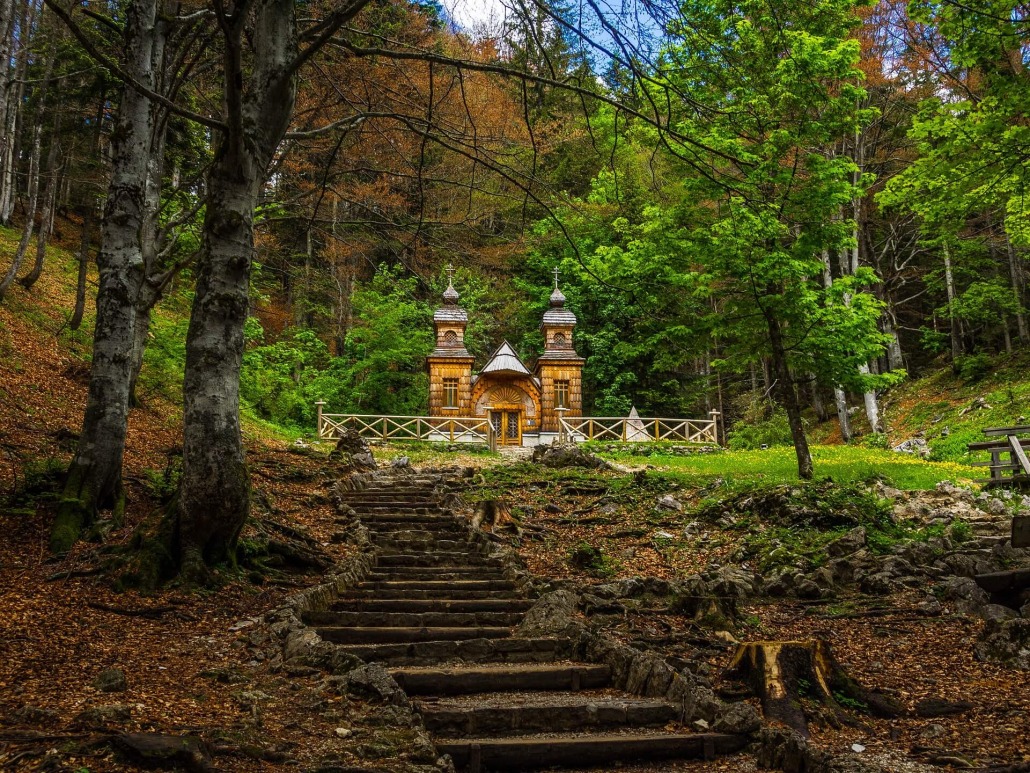
  • The Russian Chapel on a Vršič mountain pass: Chapel from 1917 was built in memory of Russian prisoners of war who built the famous road over the Vršič mountain pass.
  • The gothic church of St. John the Baptist in Ribčev Laz village near Lake Bohinj
  • Pocar homestead in Zgornja Radovna dates back to the 17th century and is one of the oldest homesteads in the Triglav National Park. Today it is an ethnographic open-air museum, a cultural monument, representing the folk architecture of the area.
  • A monument to four brave men in the Ribčev Laz village was made in memory of four Bohinj natives who were the first to climb the summit of Mount Triglav in 1778.

This brings us to the end of our Triglav National Park Guide, where we’ve shared our favourite local tips, honest advice, and all the must-see spots we think every visitor should know about. There is so much to cover in Triglav National Park that, ideally, you would spend several days here to truly explore it at a relaxed pace. However, we completely understand that most travellers don’t have the luxury of time — and this is exactly why we created our Seven Alpine Wonders Tour.

russian chapel at Vrsic
Monument to four brave men from Bohinj

7 Alpine Wonders: The Best 1-day Trip to Triglav National Park 

The tour is designed to show you almost everything we mentioned above in just one unforgettable day. It’s a full 12-hour round trip, travelling in a comfortable van with a small group, which gives you the chance to see the very best of the park without rushing on your own or worrying about logistics.

What You’ll See on the Seven Alpine Wonders Tour:

  • Radovna Valley – a quiet, scenic valley shaped by traditional Alpine life
  • Peričnik Waterfall – one of Slovenia’s most unique falls
  • Zelenci Springs – the turquoise source of the Sava River
  • Špik Mountain Range – best view of the Julian Alps
  • Vršič Mountain Pass – the highest road pass in Slovenia with stunning views
  • Soča River – the iconic emerald beauty of the Julian Alps
  • Great Soča Gorge – dramatic narrow gorge carved by the river

You can check out the full itinerary here. Throughout the day, we take you to the best viewpoints, share local stories, and give you plenty of time for photos, short walks, and enjoying the scenery. It’s the easiest and most complete way to experience the highlights of Triglav National Park Slovenia — especially if you only have one day.

We hope this guide helps you plan your visit and inspires you to explore our favourite corners of the park. And if you want to experience all of the above in a single, perfectly crafted day, we’ll be happy to welcome you on our Seven Alpine Wonders Tour.

Ready to Book the 7 Alpine Wonders Tour?

Intimate groups (max 8 people)
Top-rated on TripAdvisor
Fast and easy booking
Full money-back guarantee

Subscribe to our newsletter

Join Altitude-Activities Newsletter, and stay informed about Slovenia travelling tips, get discounts and more!