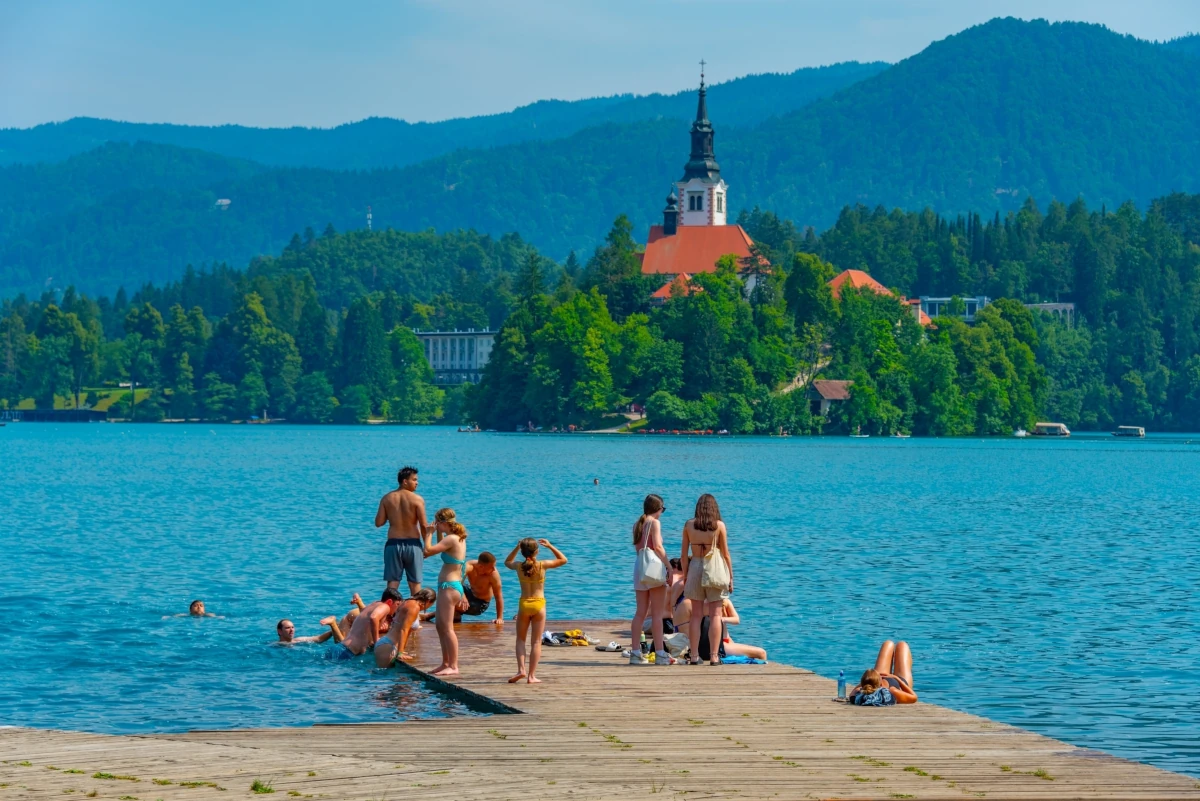
Lake Bled, Slovenia, is often one of the first places people add to their itinerary. But planning a visit can raise many practical questions. Is it worth staying in Bled, or is it better to make a day trip from Ljubljana? How long should you stay? When is the best time to go, and can you swim in the lake? This guide is written to help you answer those questions clearly and plan your visit with confidence, without unnecessary guesswork.

Beyond the lake itself, Bled is also an excellent base if you’re staying for several days. Many of Slovenia’s most well-known natural sights — including alpine lakes, gorges, mountain valleys, and Triglav National Park — are all within around two hours, making day trips easy and flexible. If you’d rather not plan everything on your own, you can also take a look at our day trips from Bled page, where we list day trips that start directly in Bled and cover some of the best places to see around Slovenia.

Where is Lake Bled Located?

Lake Bled is located in north-western Slovenia, at the edge of the Julian Alps. It sits in the town of Bled, about 55 km (around a 45–60 minute drive) from Ljubljana, the country’s capital.

The lake lies just outside Triglav National Park, which makes Bled an excellent base for exploring alpine valleys, gorges, mountain lakes, and hiking areas across the Julian Alps.

Thanks to its central location, most of Slovenia’s top natural attractions are reachable from Bled within roughly two hours, whether you’re travelling by car or joining organised day trips.

Is Lake Bled Worth Visiting?

Yes — Lake Bled is absolutely worth visiting, especially if it’s your first time in Slovenia. It’s one of those places that lives up to its reputation visually, but the experience depends a lot on how and when you visit.

From a local perspective, Lake Bled works best as a short, well-planned stop or as a base, rather than a place where you spend all day by the lakeshore. The lake itself is small and easy to explore — walking the full loop takes about 1.5 hours without stops. Most visitors concentrate on the same areas at the same time. This is why summer crowds can feel intense, particularly between late morning and early afternoon in July and August.

That said, there are several ways locals and experienced travellers still enjoy Bled:

  • Early mornings (before 9:00) are calm, quiet, and ideal for photos or a swim.
  • Evenings are noticeably more relaxed once day-trippers leave.

Staying overnight makes a big difference compared to visiting on a rushed day trip. Walking slightly away from the main lake loop quickly leads to quieter viewpoints and paths. Experienced travellers often treat Bled as a starting point, not the final destination, heading out to less crowded places during the day and returning in the evening.

It’s also worth being honest: if you’re looking for untouched wilderness or complete tranquillity in peak summer, Bled may feel too busy. In that case, nearby areas like Bohinj often suit better. But if you want iconic scenery, easy walks, swimming opportunities, and a convenient base for exploring Slovenian nature, Lake Bled remains a very strong and worthwhile choice — as long as you plan your timing wisely.

When Is the Best Time to Visit Lake Bled?

In our experience, the best time to visit Lake Bled is May and early June. This is when the landscape is at its most vibrant, with fresh green forests, clear lake colours, and longer daylight hours, while the number of visitors is still relatively low.

Temperatures are ideal for walking around the lake, hiking, and exploring nearby nature without the heat and congestion of peak summer.

By mid-July and August, Bled becomes much busier, especially during the middle of the day, which can take away from the overall experience.

Visiting in late spring allows you to enjoy Lake Bled at a calmer pace, with better light, easier logistics, and a more authentic feel.

Lake Bled Weather by Month

In Lake Bled, rain is usually short-lived rather than constant, especially outside autumn. Summer rain often comes as brief afternoon storms, while spring showers tend to pass quickly. This is why May and early June are often ideal — you get stable temperatures, fresh colours, and manageable weather without peak summer crowds.

SeasonTypical WeatherTemperatures (Daytime)Chance of Rai
Spring (April–early June)Mild, fresh air, vibrant greenery, changeable conditions15–22 °C~30–40%
Summer (late June–August)Warm to hot, stable mornings, afternoon storms possible23–30 °C~35–45%
Autumn (September–October)Cooler, crisp mornings, clear days, occasional rain12–20 °C~25–35%
Winter (November–March)Cold, quiet, occasional snow, foggy mornings possible-2–8 °C~20–30%

How do I get to Lake Bled from Ljubljana?

Ljubljana to Lake Bled by car:

  • Ljubljana and Bled are well connected by highway. Take the Ljubljana–Šentvid exit and continue to the Lesce–Bled turnoff to reach your destination.
  • Distance: 58 kilometers or 36 miles
  • Driving time: around 45 minutes
  • Please note: during the summer months or afternoon rush hours, heavy traffic congestion is possible.

Ljubljana to Lake Bled by bus: 

  • The bus usually runs on regional roads, stopping in every town or village along the way, which makes the trip longer. There is only one bus line that takes the highway, but stops at the airport.
  • Plan your trip to Lake Bled with a bus timetable!
  • Driving time: around 1 hour 15 minutes
  • Ticket prices:7,10for adults and 3,85€ for kids on weekdays, and 5,40 for adults, 3,85€ for children from 7 to 15 and 0,60€ for children under 6 on weekdays

Ljubljana to Lake Bled by train: 

  • The train takes you to Lesce-Bled train station, then you need to hop on a bus to Bled. It’s only 10 10-minute drive from Lesce to Bled.
  • Plan your trip to Lake Bled with a train timetable!
  • Driving time: around 1 hour to the Lesce-Bled train station
  • Ticket prices: from 5€ to 7,5€ on weekdays, and 6,50€ to 9€ on weekends

From the Airport to Lake Bled

Lake Bled is conveniently located near several international airports. The closest is in Ljubljana, Slovenia, but there are also nearby airports in neighbouring countries such as Croatia, Austria, and Italy. Regular bus and train connections link these airports to Ljubljana, and from there, to Bled. Some of the nearest airports to Lake Bled include:

  • Ljubljana Jože Pučnik Airport (Brnik), Slovenia – the largest and nearest airport to Lake Bled, located just 35 kilometres away—about a 20-minute drive. Buses run every hour from 9 AM to 8 PM, with tickets costing only €5.60. Check the timetable.
  • Klagenfurt Airport, Austria – It is the nearest airport in a neighbouring country, only 80 kilometres away. From the airport, you can take a taxi to the city of Klagenfurt, and then catch a Flixbus directly to Bled.
  • Venice Marco Polo or Treviso Airport, Italy – Both airports are approximately 168 kilometres from Lake Bled. Nomago buses run from Venice to Ljubljana 5 to 8 times a day, with a journey time of about 3 hours. From Ljubljana, you can take a connecting bus to Lake Bled.
  • Trieste Airport, Italy – about 172 kilometres from Lake Bled. From the airport, you can take a bus to the city of Trieste, where you can catch a Flixbus that stops in Ljubljana before continuing to Bled.
  • Zagreb Airport, Croatia – situated about 206 kilometres from Lake Bled, it offers convenient connections, with both a bus terminal and shuttle services available just outside the main terminal building. There are also Nomago buses running frequently to Ljubljana.
  • Graz Airport, Austria – located 208 kilometres from Lake Bled, this airport has both a train and bus station directly in front of the main terminal building.

Where to park in Lake Bled Slovenia?

In the town, you can only park in designated areas. Lake Bled parking spaces differ by location, payment hours, and park fees. If you’re looking for a parking map with all available parking areas around Bled, including locations and current prices, we recommend checking the official page of the Municipality of Bled, where parking zones and up-to-date information are clearly listed.

Prices are slightly higher in areas closer to the lake and in the center. There are many parking lots around Bled, which have been expanding in recent years due to increased demand during the high season.

Parking prices range from €2 to €4.50 per hour. Be sure to take a ticket from the parking machine and display it clearly on your dashboard. Payment can be made using euro coins, bank cards, or the EasyPark app. Some free parking areas around Lake Bled have a time limit of up to 2 hours—in these cases, you’ll need to indicate your arrival time.

In the summer season, you can move around the town and nearby villages with a free Bled bus. It operates every day in July and August, and it drives on three different routes:

  • Lake Line: starts in Seliše by the big Mercator mall, and goes all the way around the Lake
  • Countryside Line: starts in Seliše, goes up north to Sebenje and Zasip, and down south to Koritno, Bodešče, and Ribno
  • Pokljuka Line: starts in Seliše, goes north through Gorje and Krnica, then up to our most extensive mountain plateau, Pokljuka.

Where to stay in Lake Bled Slovenia?

When deciding where to stay in Bled, it helps to understand how different parts of the lake compare. Staying near the town centre is the most convenient option overall, as it offers the best access to restaurants, shops, the lake walk, bus station, and Bled Castle, all within walking distance.

The western side of the lake, especially around Velika Zaka and Mala Zaka, is ideal if swimming is a priority, with easy lake access and a slightly quieter feel compared to the centre.

For travellers arriving by public transport, the bus station in Bled town is the most practical arrival point and puts you close to most accommodations. Train travel requires a bit more planning: Bled Jezero station has limited connections and is mainly seasonal, while most train travellers arrive at Lesce-Bled, located in the village of Lesce, about 10 minutes by car or bus from Bled town. These two stations are separate and serve different routes, which often causes confusion for first-time visitors.

If you’d like to book accommodation directly, you can browse apartments, hotels, Airbnbs, farm stays, and homestays through our Bled accommodation page, where we link trusted local providers and options for different budgets and travel styles.

What to do and see in Bled?

There’s plenty to do in and around Lake Bled. The most popular attractions are close together and easy to combine into a single itinerary. Highlights include:

  • Bled Castle, perched high above the lake, offering panoramic views, a small museum, and one of the best viewpoints in the area. For detailed information, practical tips, and insider advice, see everything you need to know about Bled Castle in our comprehensive visitor’s guide.
  • Bled Island, reached by traditional pletna boat, rowing boat, or paddleboard, home to the iconic Church of the Assumption. If you’re planning to visit Bled Island, we recommend reading our guide about the Church on Lake Bled, where you’ll find everything you need to know about the island, the church, and what to expect before you go.
  • Vintgar Gorge, a scenic wooden walkway following emerald water through a narrow gorge, located just a short drive or bike ride from Bled.

The lake loop walk, a flat 6 km path around the water, perfect for an easy stroll, swimming stops, and café breaks. Beyond the immediate lake area, Bled also works well as a base for exploring nearby alpine valleys, viewpoints, and lakes within Triglav National Park, making it a great starting point for both sightseeing and outdoor activities.

If you’re looking for things to do in Bled beyond these popular highlights, take a look at our comprehensive page featuring all day trips starting from Bled, where you’ll find plenty of ideas for exploring the area in more depth.

Day Trips From Bled Main Bus Station

Making day trips from Bled by public transport is easier than many travellers expect, especially if you’re staying near the Bled Main Bus Station. Bled is well connected by regular bus lines, which makes it a practical base for exploring nearby alpine regions without a car.

From the main bus station, you can comfortably reach places like Bohinj and Kranjska Gora, as well as several other important towns and natural attractions in the region. In our comprehensive blog about day trips from Bled Main Bus Station, we explain exactly how to get from Bled to Bohinj, Kranjska Gora, Bovec, and other nearby destinations, including practical tips on bus schedules, travel times, and what’s realistic to do in one day.

Can You Swim in Lake Bled?

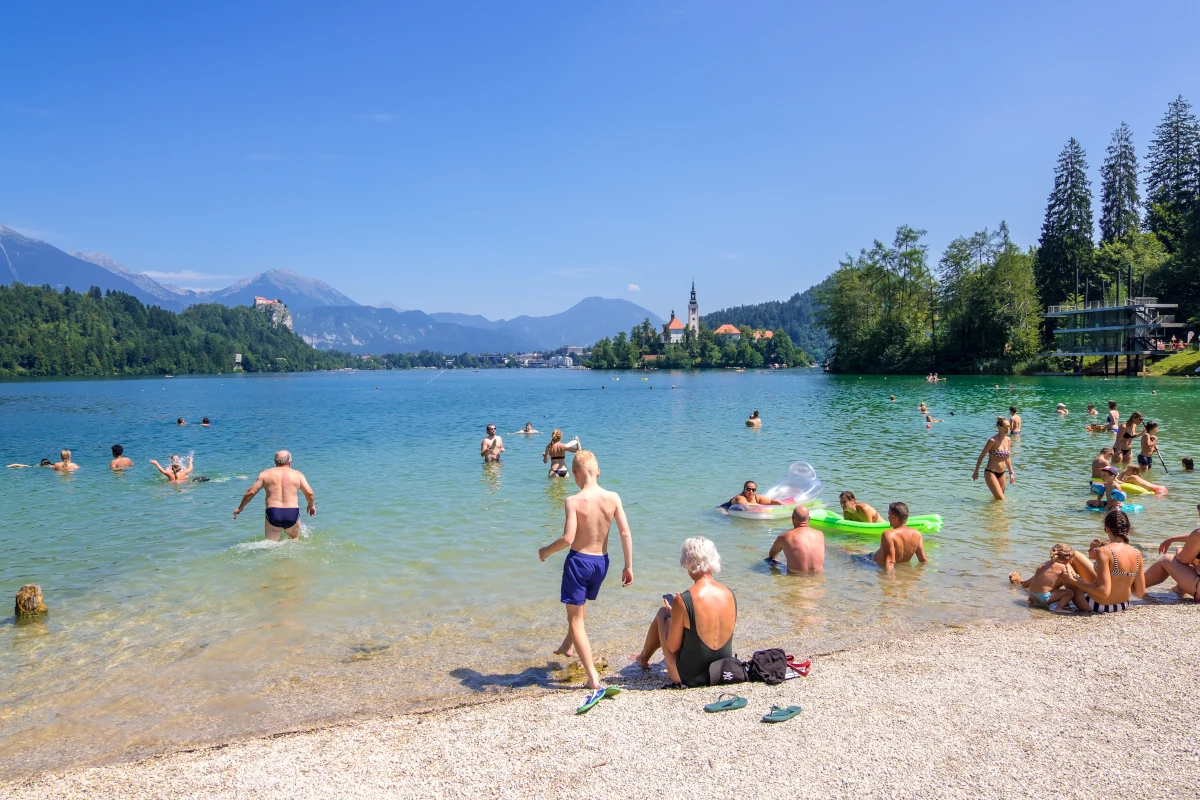
Yes, swimming in Lake Bled is allowed, but only in designated swimming areas, not everywhere around the lake. The main official spots include Grajsko kopališče (below Bled Castle) and areas around Velika Zaka and Mala Zaka, where access is easier, and swimming is clearly permitted.

During summer, water temperatures are usually very comfortable, ranging from 22–26 °C in July and August, which makes Lake Bled one of the warmer Alpine lakes and suitable for longer swims. In late spring and early autumn, temperatures drop to around 16–20 °C, still refreshing but manageable on warm days. Outside the summer season, especially from late autumn to early spring, the water becomes much colder and swimming is generally only suitable for cold-water swimmers.

The water in Lake Bled is generally clean and regularly monitored, with good quality during the swimming season. Thanks to natural springs and controlled access points, the lake is considered safe for swimming in designated areas, especially in summer.

Lake Bled Beaches Explained

Swimming in Lake Bled is concentrated around a few well-known beach areas, each offering a slightly different experience.

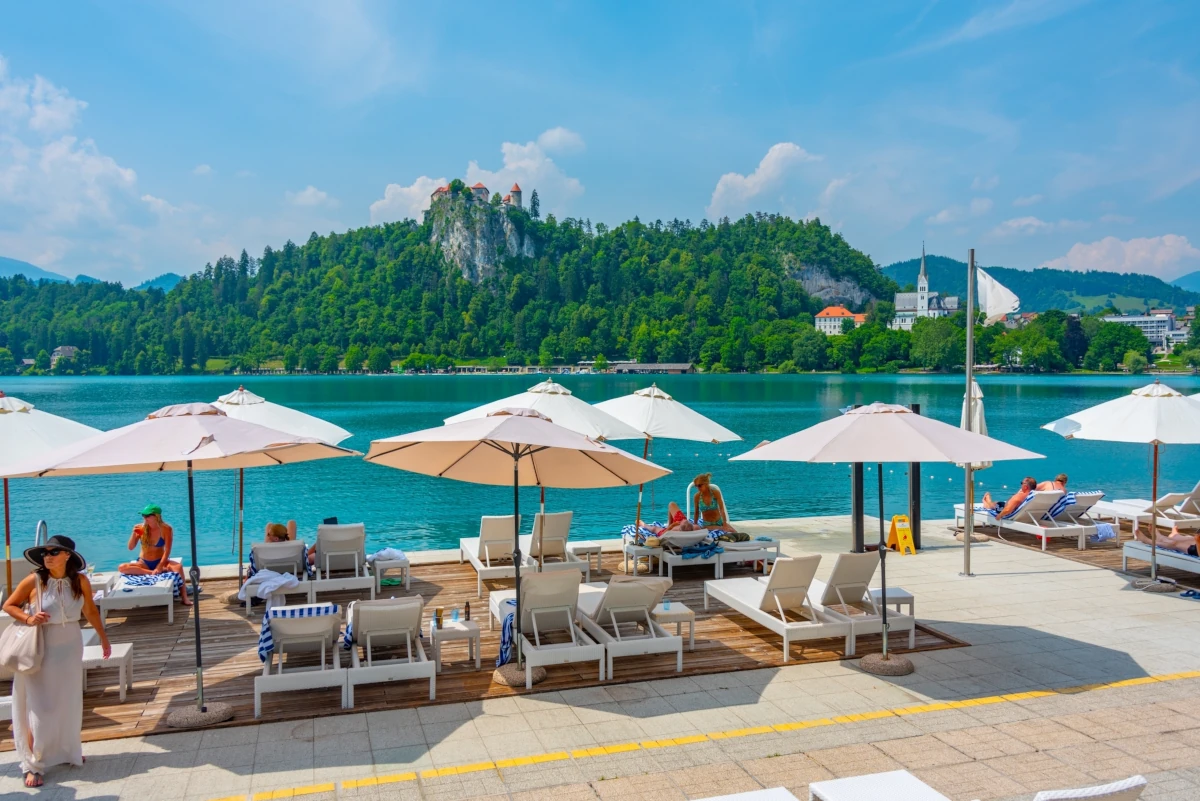
  • The most developed option is Grajsko kopališče, located below Bled Castle. This is a managed lido with paid entry, grassy sunbathing areas, ladders and piers for easy water access, showers, changing cabins, toilets, sunbed rentals, and a café/bar on site. It’s ideal if you want comfort and facilities in one place.
  • On the western side of the lake you’ll find Velika Zaka, a popular public area with free access, a mix of grassy and pebbly shoreline, and gentle entry into the water. There are toilets nearby, a snack bar in summer, and plenty of space, making it a favourite for locals and families.
  • Just next to it is Mala Zaka, slightly smaller and often a bit quieter, with similar natural access to the lake but fewer facilities.
  • Mlino Beach offers easy water access, a laid-back atmosphere, and restaurants and cafés close by, although facilities are more limited compared to Grajsko kopališče.

Across all beaches, water quality is generally good in summer, but none offer lifeguard supervision for open swimming, so visitors should always swim responsibly and be aware of boat traffic.

Grajsko Kopališče

Grajsko Kopališče Beach in Lake Bled

Mala Zaka

Mala Zaka Beach in Bled

Velika Zaka

Pebble Beach in Mala Zaka, Lake Bled

Most Family Friendly Swimming Area in Bled

Grajsko kopališče is by far the most family-friendly bathing area at Lake Bled, thanks to its organised layout and full range of amenities. This managed lido offers safe and easy water access via ladders and piers, grassy sunbathing areas, changing cabins, showers, toilets, and sunbed rentals. There is also a café/bar, shaded areas, and clearly defined swimming zones, which makes it especially convenient for families with children who want comfort, facilities, and a stress-free swimming experience in one place.

Can you Swim to Lake Bled Island?

Swimming to the island with the church in Lake Bled is possible, and some experienced swimmers do it, but it’s important to be realistic about your abilities and conditions. Bled Island, home to the Church of the Assumption, is roughly 300–350 metres from the nearest shore. For a confident swimmer, this usually takes 10–20 minutes one way, depending on pace and water conditions.

There is no lifeguard or baywatch covering the open lake or the island, and swimming to the island is not officially supervised or marked as a swimming route. This means you should be cautious of boat traffic. Swimming is safest on calm mornings, staying well visible, and ideally using a bright swim buoy. Less confident swimmers, or those unfamiliar with open-water swimming, should avoid attempting the crossing and enjoy the island by boat instead.

Bled Pletna Boat: Where to Book, and Departure Points

Cruising across Lake Bled in a traditional wooden boat known as a pletna is one of the area’s most iconic experiences. This flat-bottomed vessel, similar in style to a Venetian gondola, is steered by a standing rower and takes you to the picturesque island in the middle of the lake, home to a charming church and centuries of legends.

A trained helmsman rows the traditional 18-passenger pletna boat using a unique stand-up, two-oar technique. This allows you to sit back, relax, and take in the scenic alpine views as you glide across the lake. While advance booking isn’t always necessary, it’s a good idea to call ahead or reserve shortly before your visit—especially during the busy summer season.

You can board a boat from one of the main departure points:

Where can I Rent Rowing Boat on Lake Bled?

Rowing boats can be rented at several points around Lake Bled, most commonly in Mlino, Velika Zaka, and near the main promenade below the castle hill. Renting a traditional wooden rowing boat usually costs around €15–20 per hour. 

Boats are typically available from April to October, depending on weather conditions. During the winter months, rowing boat rentals are usually not available, as the lake is colder, days are shorter, and demand is very low.

Reaching the island by rowing is very doable, but it can feel physically demanding for first-time rowers, especially if there is wind or boat traffic. The distance is short, but rowing requires coordination and steady effort.

Rowing boats on Lake Bled are rented on-site, and advance reservations are generally not required. During the high season in summer, there may be short waiting times at popular spots, but availability usually moves quickly.

These are the places to hire a private rowboat:

Where can I rent a Stand-up paddleboard (SUP)?

Stand-up paddleboards (SUPs) can be rented at several locations around Lake Bled, most commonly in Mlino, Velika Zaka, and near the main lakeside promenade. Rentals are usually available from late May through September, depending on weather and water temperatures.

Prices typically range from €15 to €20 per hour. Reaching Bled Island by SUP is possible and quite popular, but it requires reasonable balance and some upper-body strength. For beginners, the paddle to the island can feel demanding, especially if there is wind or boat traffic, and it usually takes 20–30 minutes one way at an easy pace. Calm mornings are the best time to paddle, as the water is smoother and the lake is less busy.

How Long Does It Take to Walk Around Lake Bled?

Walking around Lake Bled is one of the easiest and most rewarding things to do in Bled. The full loop is about 6 kilometres, which takes around 1.5 hours without stops. With photo breaks, cafés, or a swim, most visitors spend 2–3 hours enjoying the walk at a relaxed pace.

The path is mostly flat and well maintained, making it pushchair-friendly and suitable for families, with only a few short sections where you may need to slow down.

You can walk in either direction, but many people prefer going counter-clockwise, starting near the town centre, as this gives open views of the island and castle for most of the walk.

Along the way, you’ll pass lakeside cafés and bars, restaurants in the Mlino area, several toilet facilities (near Velika Zaka, Mala Zaka, and the main beaches), benches, small piers, swimming spots, and shaded sections. You’ll also see rowing areas, traditional pletna boats, and quieter stretches away from traffic.

Can You Combine a Lake Bled Walk With a Bled Castle Visit?

Yes, it’s very easy to combine a walk around Lake Bled with a visit to Bled Castle. The lakeside path passes directly below the castle hill, and a well-marked footpath leads uphill to the castle entrance, making it a natural stop during the walk.

Many visitors choose to walk part of the lake first and then head up to the castle either midway through the loop or at the end. Keep in mind that the ascent to the castle is short but steep, taking around 10–15 minutes, so comfortable shoes are recommended.

If you’re planning to include the castle in your walk, we recommend reading our Lake Bled Castle guide, where you’ll find practical tips on tickets, opening hours, viewpoints, and what’s actually worth seeing inside before you go.

3 Best Lake Bled Viewpoints

Some of the best views of Lake Bled come from short hikes above the lake that reward you with classic postcard perspectives. The three best viewpoints are:

  • Ojstrica Viewpoint – the most accessible option, reached in about 20 minutes, offering a perfectly framed view of the island and castle.
  • Osojnica Viewpoint – slightly higher and quieter than Ojstrica, with a wider panorama and fewer people.
  • Mala Osojnica Viewpoint – the highest and most dramatic viewpoint, best for sunrise or sunset, but also the steepest and most demanding hike.

All three viewpoints are close to each other on the western side of the lake and can be combined if you’re comfortable with steeper forest trails.

Which are the best restaurants near Lake Bled?

Most restaurants, cafés, and snack bars are found in the town center and along the lakeshore. In the cosy lakeside cafés with stunning views, you can also try the iconic Bled cream cake, known as kremšnita.

  • Cafe Park: original cream cakes, made fresh every day
  • Cafe Belvedere: a historic Tito residency offers a stunning views over Lake Bled and an island
  • Castle Coffeeshop: enjoy the delicious creamcake between the castle walls, overlooking Lake Bled
  • Pastry Zima Bled: locals say that this is where you get the best cream cakes

Bled offers a wide range of culinary experiences. We recommend trying some traditional Slovenian dishes, especially those from the Upper Carniola region. Enjoy fresh, flavourful Slovenian cuisine at some of the town’s top restaurants:

  • Oštarija Peglez’n: charming and cozy restaurant, large portions of Mediterranean food and seafood, well-known for its Lake Bled trout
  • Restaurant Arbor: local and fresh meals, Slovenian, Italian and Mediterranean food, lunch specials (weekdays from 11 am to 1 pm)
  • Wine Bar & Restaurant Sova: opposite our office in central Bled, modern menu, homemade brandy
  • Restaurant Central Bled: one of the most popular restaurants, traditional Slovenian dishes, especially pork baby back ribs, cottage cheese dumplings and pasta
  • Al Fresco Restaurant: newly opened restaurant, gourmet cuisine meets the comfort of home, offer breakfast, lunch, and dinner
  • Pizzeria Rustika: the best pizza in town, also offers great burgers and salads
  • Bled Castle Restaurant: run by a family of famous chefs, it offers tasting menus; if you book in advance, you gain a free entrance to the Bled Castle

If you’re looking for the best restaurants and local food in Bled, and want help choosing between lakeside restaurants, traditional Slovenian spots, or places with the best value for money, you can take a look at our Bled restaurant guide to make your decision easier.

Questions and Answers

Lake Bled has a maximum depth of around 30 metres, although most of the lake is significantly shallower, especially near the shores and designated swimming areas. The deepest section is located closer to the centre of the lake, between the shoreline and the island. This depth plays an important role in summer, as it allows the lake to warm up faster than many other Alpine lakes, making swimming more comfortable during the warmer months.

Lake Bled can feel more expensive than other parts of Slovenia, especially during peak summer. Accommodation prices are highest in July and August, and restaurants around the lakefront tend to charge more. You can save money by staying slightly outside the centre, eating away from the main promenade, visiting in shoulder season, and using public transport instead of driving. Prices are generally much more reasonable in spring and autumn.

Traffic can be heavy in July and August, especially during midday. Early mornings, evenings, and staying near the centre help avoid most congestion.

You’ll commonly see swans, ducks, fish, and other water birds around the lake. Swans are present year-round and are one of Bled’s most recognisable features.

No, a car is not essential. Lake Bled is compact and easy to explore on foot, and public buses connect Bled with nearby towns and attractions. A car can be useful for flexibility, but many visitors manage perfectly well without one.

Yes, Lake Bled can be very enjoyable in winter if you prefer a quieter atmosphere. While swimming and boating are limited, winter walks, viewpoints, and nearby nature offer a peaceful experience with far fewer visitors.

The main lakeside path is mostly flat and well maintained, making it accessible in many sections. However, viewpoints and Bled Castle involve steep paths and are not fully accessible.

Yes, there are several supermarkets within walking distance of the town centre, making it easy to buy food, snacks, and essentials during your stay.

Yes, Lake Bled is a popular and realistic day trip from Ljubljana, taking around one hour by bus or car. However, staying overnight allows for a more relaxed experience.

No, walking around the lake and accessing the main lakeside path is free. Fees apply only for attractions such as Bled Castle or organised swimming areas.

Yes, Lake Bled is generally very safe and well suited for solo travellers, couples, and families with children.

Subscribe to our newsletter

Join Altitude-Activities Newsletter, and stay informed about Slovenia travelling tips, get discounts and more!